Welcome! Click course links to visit the site sponsoring the free Physical Therapy CME class. All courses are FREE & approved for contact hours required for PT license renewal in most states. CME expiration dates included, if applicable.

Aquatic Physical Therapy

NPWTAquatic Physical Therapy Competency Course: Historical Perspective of Aquatic Physical Therapy- This course provides a historical overview of key periods, places and uses related to water as a therapeutic medium prior to the emergence of physical therapy. This course will introduce participants to the use of water as a therapeutic medium prior to the emergence of Modern Aquatic Therapy. The establishment of the Aquatic Physical Therapy Section will also be discussed. Describe use of water as a therapeutic medium in ancient times, middle ages, early spas and hydrotherapy in Europe and the United States. Identify key periods, places and uses related to water as a therapeutic medium in the earlier history of physical therapy Aquatic Physics. Identify physical principles of water as they relate to rehabilitation in the water. Apply the principles of aquatic physics to improve aquatic physical therapy interventions. Apply knowledge of aquatic principles to improve physical therapy outcomes.

1.0 Free CEUs for Physical Therapists


apta logo

Workforce Skills- Managing Conflict

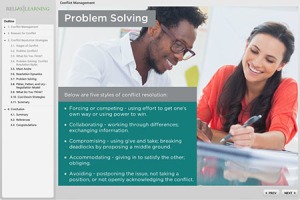
Workforce Skills- Conflict Management -Any work situation involves juggling diverse tasks and interacting with a variety of different people. This course reviews the sources of potential conflict in the workplace along with effective conflict resolution strategies you can use to keep your work environment productive and professional.
Describe sources of potential conflict.
Identify the stages of conflict.
Recognize and use different approaches for handling conflict effectively.


1.0 Free CEUs for Physical Therapists

relias logo

Contemporary Techniques for Electrical Stimulation Modalities

esmElectrical Stimulation Modalities Describe the considerations, indications, contraindications, and precautions associated with electrical stimulation modalities. Relate proven and contemporary techniques for optimum TENS modality treatment that is research-based. Examine ways to apply contemporary techniques for optimum interferential Estim modality treatment that is research-based. Explain ways to apply proven and contemporary techniques for optimum Neuromuscular NMES modality treatment that is research-based.

2.0 Free CEUs for Physical Therapists
 Relias Academy

Adequate Carbs for Excercising

Fueling for Exercise and Recovery-How to Optimize Carbohydrate Intake- Athletes continually seek strategies to improve performance, but not all methods are safe or effective. Adequate carbohydrate stores (muscle and liver glycogen and blood glucose) are critical for optimum athletic performance during intermittent high-intensity work and prolonged endurance exercise. Fueling with adequate carbohydrates before, during and after endurance events can enhance performance in endurance and ultra-endurance events. Recent research reveals that using multiple carbohydrate sources compared to a single source allows for a greater use of carbohydrate in events lasting more than three hours. Nutritional strategies that enhance carbohydrate availability before, during and after exercise can improve an athlete’s performance. Identify an appropriate carbohydrate intake regimen as well as the rationale for using it before, during and after exercise based on a variety of factors, including body weight and type, and duration and intensity of activity being performed. Describe the effectiveness of various forms and sources of carbohydrate, including usefulness of the glycemic index. Discuss the effectiveness of other substrates on exercise performance, such as low-carb, high-fat and high-protein regimens.

1.0 Free CEUs for Physical Therapists

Free until  5/5/16
Gannett Education
coke logo

3 Free CEUs for Physical Therapists- Understanding the Complications, Medications, & Management of Diabetes

Diabetes-PicDiabetes and the Implications for the Physical Therapist- Diabetes occurs in 25 million people in this country; seven million people unaware that they have it. Complications of diabetes can be deadly, and proper diagnosis and management are crucial. Physical therapists in homecare, inpatient, and outpatient services will increasingly encounter patients with this disease. Proper understanding of complications, medications, and management is crucial in providing patient care.
1. Type 1 and type 2 diabetes: their definition and their differences. 2. Proper diagnosis of type 1 and type 2 diabetes and monitoring of patients.
3. Disease states associated with diabetes.
4. Diabetes medications and side effects, as well as non-drug therapy.
5. Safe performance of physical therapy to patients with diabetes.

3.0 Free CEUs for Physical Therapists

pt-logo

Rehab Techniques for the Shoulder

shoulderPart I of XII- Diagnosis & Treatment of the Upper and Lower Quadrant- List and summarize the principles of rehabilitation. Describe rehabilitation techniques for the shoulder. Summarize Mobilization with Movement techniques for the shoulder.

1.0 Free CEUs for Physical Therapists

Understanding Complex Regional Pain Syndrome

crpsComplex Regional Pain Syndrome List all of the criteria required to establish work-relatedness for an occupational disease. Describe the risk factors that may help prevent Complex Regional Pain Syndrome (CRPS). Understand the symptoms and signs of CRPS. Explain the treatment plan for patients with CRPS.

1.0 Free CEUs for Physical Therapists
FlexCEUs

Biofeedback

Biofeedback- The term biofeedback came about in the 1960s largely through the studies of Neal Miller. In 1969, the Biofeedback Research Society (now known as the Applied Association for Psychophysiology and Biofeedback) was formed to unify the new field. Healthcare professionals across disciplines may find it helpful to include biofeedback in their treatment repertoire, especially when treating those with chronic pain or other lifestyle disorders. Stress assessment and teaching relaxation techniques are often important steps toward helping these patients. There are many methods of biofeedback, including heart-rate variability, surface electromyography, skin temperature, skin conductance and electroencephalography. Common ailments treated with some efficacy using biofeedback include chronic pain/headache, anxiety, ADHD, hypertension, seizure disorders, and urinary incontinence. Explain the correlation between stress and illness, as well as relaxation techniques for stress management. Describe the basic set-up and application of the most common methods of biofeedback. Identify three common ailments treated using biofeedback.

1.0 Free CEUs for Physical Therapists

Free until 10/20/15 Gannet Healthcare Education

coke logo

Ebola: An Overview

Ebola Virus Disease- Describe the history of Ebola outbreaks in Africa since 1976. State three initial symptoms and five subsequent signs and symptoms associated with Ebola viral infection. List the three ways in which Ebola is transmitted among humans during an outbreak. Explain the three components of standard supportive therapy for treatment of Ebola infection. Discuss the main issue associated with the use of vaccines and therapeutics such as ZMapp for the treatment of Ebola virus disease in West Africa. State four ways in which the CDC is responding to issues of workplace safety in the United States. 

  4.0 Free CEUs for Physical Therapists
A Train Education

Temporal Processing and Motor Function

Introduction to Clinical Application of Interactive Metronome- This informative presentation will challenge you to think about the effectiveness & efficiency of the services you provide to your patients and students. There are numerous peer-reviewed clinical studies that clarify the role of timing in the brain (or what is referred to as temporal processing) to a wide array of human cognitive & motor abilities in both children and adults, including attention/concentration, working memory, executive functions (planning, organizing, self-evaluating, self-control), cognitive processing and speed, speech production and auditory processing, language, reading, learning, and motor control/coordination. You will learn the importance of addressing underlying deficits in timing & rhythm to improve neural efficiency in order to accelerate and exceed expected outcomes. The Interactive Metronome is a patented intervention that improves timing in the brain & body. An overview of the clinical application of Interactive Metronome relevant to a variety of allied health and educational disciplines will be discussed.

1.0  Free CEUs for Physical Therapists


Provided free of charge by: Interactive Metronome

Regulation of Body Weight


Regulation of Body Weight- Define obesity, explain how to measure it and list its potential health complications. Discuss the consequences of body fat distribution in men and women. Discuss the interactions of hormones, peptides, neurotransmitters, organs, and the brain in the regulation of energy balance, and the roles they play in obesity.  

1.0 Free CEUs for Physical Therapists

 Free until 12/31/14

Provided by Gannet Education &
 

Shoulder Rehab

Shoulder Rehab 114 - Summarize the relationship between glenohumeral internal rotation deficit(GIRD), SLAP tears, posterior impingement, scapula dyskinesis and shoulder micro-instability. Effectively diagnose SLAP tears, posterior impingement, scapula dyskinesis and shoulder mico-instability using screening and clinical tests. Cite common pitching pathomechanics and describe their association with specific elbow injuries. Paraphrase the peel back model for SLAP tears. Relate proper pitching biomechanics with injury prevention strategies for the adolescent overhead athlete.

1.0 Free CEUs for Physical Therapists

Offered by: Chiro Credit